

What is Performance Analytics?
It is the method of capturing, analysing, and visualising data in order to uncover insights into the performance of a business or an organisation. This helps organisations determine their strengths, weaknesses, and areas to improve. Through the use of the power of performance analytics, businesses are able to make better-informed choices and implement strategies to improve their processes and produce better results.
In this article, we’ll look at the concept of performing analytics, its significance, and the way it operates. We will also examine different examples of how performance analytics can be applied across various industries, the advantages and challenges of its use, as well as the significance of Key performance indicators (KPIs) within performance analytics. In addition, we will define the distinction between performance appraisals and performance analytics and explore the connection between performance analytics and Salesforce.
What is the term “Performance Analytics?
For success in business and organisations, performance analytics can be seen as an indicator of data-driven insights. It’s the process of gathering, analyzing, and presenting data in order to get a complete understanding of how an organisation or an individual performs. This powerful tool allows the recognition of patterns, trends, and areas in need of improvement.
With the help of performance analytics, companies can be able to evaluate the effectiveness of their sales campaigns, marketing strategies, and other initiatives. This allows them to use resources in a way that will yield the highest ROI. Furthermore, it allows organizations to keep track of the progress made by people towards their goals and encourages a culture of accountability and continual expansion.
Performance analytics extends beyond data collection. It’s about turning raw data into useful insights. Through this approach, based on data, companies can pinpoint their top-performing employees and teams, while acknowledging their efforts and developing methods to duplicate their successes throughout the organization. This creates a culture of excellence where continual improvement is the mainstay.
Performance analytics are an essential tool for businesses trying to stay on top. It gives a complete knowledge of operational efficiency and customer satisfaction, as well as overall performance. With this understanding, companies can make educated decisions, improve processes, and sustain growth. Performance analytics isn’t only a tool, it’s an approach to data-driven decision-making as well as an unstoppable determination to achieve excellence.
Why Performance Analytics Is Important
Performance analytics are a crucial tool for both businesses and organisations trying to be successful in the present market. By analyzing, collecting, and visualizing information about the various aspects of performance, organizations can benefit from valuable insights that allow their decision-making to improve operations, optimize their processes, and sustain growth.
One of the main reasons why performance analytics is vital is that it gives a complete picture of how a company or company is performing. Through the tracking of the key metrics of performance (KPIs) and assessing performance against goals set business can spot areas of strength and weakness. This helps them assign resources efficiently, prioritize the improvement effort, and ensure that their plans are in line with their goals.
Alongside aiding in data-driven decision-making Performance analytics can also play an important role in enhancing efficiency and productivity. Through the analysis of the performance of their business, they are able to identify the sources of bottlenecks, inefficiencies, and areas that can be improved. This helps them optimize their processes, cut costs, and provide greater value to customers.
In the end, performance analytics can provide businesses with an advantage. By constantly monitoring and analyzing the performance of their business, they are able to stay ahead of the trend and quickly adapt to market trends. They can spot new trends and patterns, predict the needs of customers,s and come up with new strategies to differentiate themselves from their competition.
How Performance Analytics Works
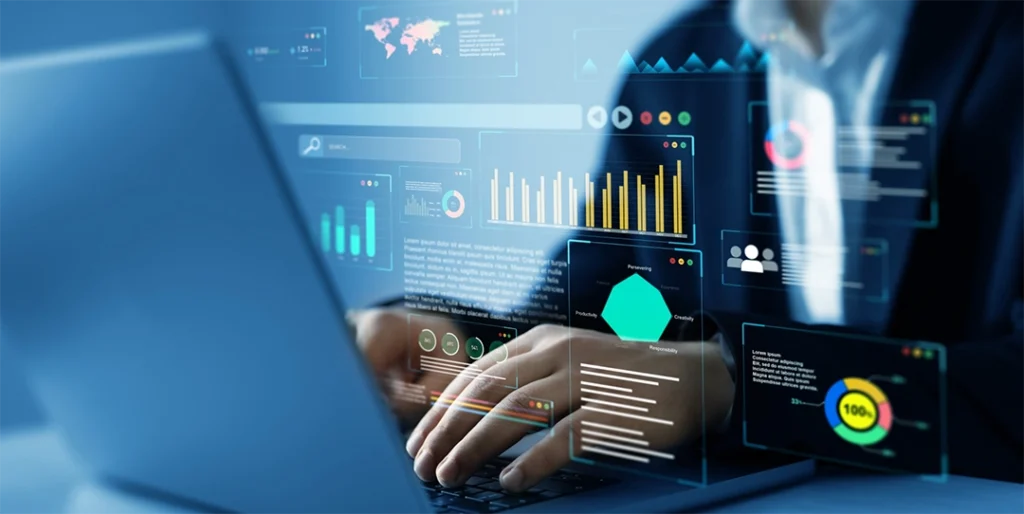
Performance analytics, an effective tool for businesses, turns raw information into useful insights that drive success and growth. The process starts with the careful gathering of data from a variety of sources, like customer transactions, financial records, and operational metrics. The most advanced techniques for statistical analysis and Data visualisation tools. Then, they are used to analyze the data, uncovering patterns, trends, and connections.
Performance analytics is a continuous process that permits the continuous monitoring and refinement of strategies. Regularly assessing performance helps businesses to improve their performance over time to ensure agility and sensitivity to the changing dynamics of markets and the preferences of customers. By incorporating feedback mechanisms into their processes and making necessary adjustments, companies can remain ahead in an increasingly competitive marketplace.
Embracing performance analytics transforms data into a valuable asset. It allows businesses to make educated decisions, improve operations, and attain sustainable growth. It doesn’t matter if the aim is improving satisfaction with customers, boosting operational efficiency, or getting an advantage in competition. Performance analytics is an essential tool to attain the highest level of business performance.
Examples of How Performance Analytics Is Used
Education
In the realm of education, the role of performance analytics is integral in enhancing student outcomes. Through collecting and analysing information on the performance of students, such as attendance, engagement, and achievement, educators can spot at-risk students and provide specific interventions to help them achieve academic success. Performance analytics also aids in assessing the effectiveness of methods used to teach and enables teachers to make adjustments based on data to improve the learning outcomes.
Healthcare
In the healthcare industry Performance analytics are essential in improving the quality of care for patients and decreasing costs. Clinics and hospitals use performance analytics to monitor the outcomes of patients, spot trends in the care of patients, and optimize resource allocation. By analyzing patient readmissions, lengths stays, and the degree of medication compliance Healthcare providers can spot areas of improvement and then implement methods that are based on research to improve the quality of care for patients.
Sports
Performance analytics can also be an extremely effective tool in the sports industry. Teams and athletes of all sports utilize the use of performance analysis to get insight into player performance, discover strengths and weaknesses, and optimize training strategies. By analyzing data from the players’ stats, game footage, and physiological measurements, teams of athletes can make informed choices about the selection of players, their tactics, and training plans.
These examples show the variety of applications of performance analytics in different industries. Through the use of analytics and data, organizations, companies, and individuals are able to get valuable insights, make well-informed decisions, and lead constant improvement.
Benefits of Performance Analytics
Performance analytics can be described as an innovative tool that enables organizations to realize their full potential and flourish. Through harnessing the wealth of data available, companies are able to embark on a revolutionary process, propelling themselves into new heights of achievement.
Recognizing areas that need Improvement
One of the main advantages of performance analytics is its ability to spot areas that could benefit from improvement. By analyzing data in a meticulous manner and comparing it to standard benchmarks and industry norms, companies have a clear view of their weaknesses and strengths. With this information, they can responsibly use their funds, focusing on initiatives that will have the most effectiveness and then implementing specific strategies to address specific issues face-to-face.
Realistic Goals and Objectives
Performance analytics also acts as a lighthouse that can help in creating realistic goals and objectives. In gaining a comprehensive knowledge of their performance and identifying areas of growth, companies can set realistic targets that are in sync with their overall strategic plan. The goals that are clearly defined serve as a guide to ensure that the efforts are directed towards the most productive areas, maximizing the chance of achieving success.
Increasing Productivity and Efficiencies
Furthermore, it can be a catalyst for improved efficiency and productivity. Through the use of analytics on data, businesses are able to identify bottlenecks and inefficiencies that could be hindering their growth. Armed with this information, they can improve processes, removing the time-consuming work and maximizing the allocation of resources. What does this mean? A significant increase in productivity, an impressive cost reduction, and an overall improvement of operational efficiency.
Being Competitive in a Constantly Changing Market
In today’s competitive business environment Performance analytics is now an essential strategic requirement. Through continuous monitoring and analysis of the performance of their businesses, they can keep ahead of the competition and quickly adapt to the constantly changing market. They can detect new trends, anticipate the needs of customers, and develop creative strategies that differentiate them from their competitors.
In the end, performance analytics act as the foundation of data-driven decision making, allowing companies to navigate the complexity of modern-day business with confidence and accuracy. It allows them to optimize operations, establish achievable goals, and achieve an advantage in the market. Through harnessing the potential of analytics, data companies can unlock the keys to long-term growth, sustainable growth, and long-term prosperity.

Performance Analytics or Performance Appraisals?
Performance appraisals and performance analytics are two important instruments for measuring and enhancing the performance of employees. But they each have their own strengths and weaknesses, and should be used in different scenarios. This article will highlight the main differences between performance analytics and appraisals for performance and aid you in choosing which one is the best fit for your business.
What tool is the best fit for your company? If you’re searching for a method of measuring employee performance measurably using data, then performance analytics can be a viable alternative. If you’re looking for a method to give employees feedback and establish objectives for their future, and set goals for the future, then performance appraisals are an excellent alternative. You could also make use of both performance analytics and appraisals to provide a complete view of the performance of your employees.
Salesforce Performance Analytics through Salesforce
Performance analytics within Salesforce is an effective tool that allows businesses to increase their efficiency by giving insight into the most important indicators of performance (KPIs) as well as discovering trends and forming precise predictions. With Salesforce’s tools for performance analysis,s companies can monitor KPIs and track them in real-time and develop customizable dashboards as well as reports. They also integrate data and reports. They also integrate performance analytics with and reports, and integrate performance analytics with. Salesforce’s capabilities for performance analytics go beyond the traditional business data, such as sentiment analysis on social media, as well as customer feedback.
Performance analytics within Salesforce is a powerful tool that could aid businesses in improving their performance by offering insights into KPIs, finding trends, and making accurate forecasts. Salesforce offers a comprehensive overview of business performance, its flexibility in scalability, and an intuitive interface for users. Salesforce is an ideal solution for businesses seeking to enhance their performance analytics capabilities.